

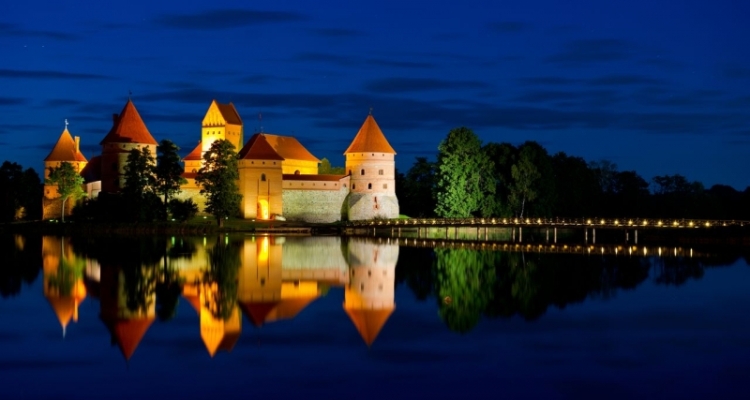
University Education in Lithuania
Situated on the eastern shore of the Baltic Sea, Lithuania is a member of the European Union, the Schengen Area, and the European Higher Education Area. Its Bologna-aligned higher education system offers academic and professionally oriented programmes at bachelor’s, master’s, and doctoral levels.
Lithuanian institutions provide English-taught programmes across business, engineering, computer science, health sciences, medicine, dentistry, social sciences, communication, the arts, and the humanities. Many international students study in Vilnius, Kaunas, and Klaipėda.
Why Study in Lithuania?
Lithuania offers several advantages to international students:
- A higher education system aligned with European standards
- English-taught undergraduate and postgraduate programmes
- Academic and applied study options
- Programmes structured around the European Credit Transfer System
- Tuition fees that may be more accessible than in some European destinations
- An international student community
- The opportunity to study and live within the Schengen Area
One academic year corresponds to 60 ECTS credits, and only accredited programmes are entered in Lithuania’s official register of study programmes and qualifications. Students should therefore check the accreditation of the individual programme, not only the status of the institution.
Universities in Lithuania
Notable higher education institutions include:
- Vilnius University
- Kaunas University of Technology
- Vytautas Magnus University
- Vilnius Gediminas Technical University
- Lithuanian University of Health Sciences
- Mykolas Romeris University
- ISM University of Management and Economics
- Klaipėda University
- Vilnius Academy of Arts
- LCC International University
A university should not be selected solely on the basis of rankings. Students should also evaluate the curriculum, language of instruction, accreditation, admission requirements, total cost, location, and long-term career value.
Students comparing Baltic destinations may also explore University Education in Estonia alongside Lithuania and assess the differences in programmes, costs, and post-study opportunities.
Admission Requirements
Bachelor’s applicants must hold a secondary education qualification that provides access to higher education in their home country.
Master’s applicants need a relevant bachelor’s degree, while doctoral applicants must hold an appropriate master’s qualification. Universities may assess whether the applicant’s previous studies provide a suitable academic foundation for the chosen programme.
Commonly requested documents include:
- Passport
- Diploma or provisional graduation certificate
- Academic transcript
- Proof of English proficiency
- Motivation letter
- Curriculum vitae
- Letters of recommendation
- Programme-specific portfolio or supporting documents
- Certified English or Lithuanian translations
Each university conducts its own admission process. Academic criteria, documentation, application fees, and deadlines vary by institution and programme.
Is an ÖSYM Result Required?
There is no single ÖSYM requirement that applies to every Lithuanian university.
Some institutions may ask bachelor’s applicants from Türkiye to provide evidence of their eligibility for higher education or additional documentation concerning their academic background. This may include an ÖSYM examination result.
Applicants should check the university’s country-specific requirements. It would be inaccurate to state either that all Lithuanian universities require an ÖSYM result or that none of them do.
Recognition of Foreign Qualifications
Qualifications obtained in Türkiye must be academically assessed in Lithuania. The assessment may be conducted by an authorised university or, where applicable, by the Centre for Quality Assessment in Higher Education.
The level, purpose, duration, quality, and learning outcomes of the qualification are considered. Academic recognition does not constitute automatic admission; the final admission decision remains with the university.
A complete application may normally be processed within 20 working days. The procedure may take longer if additional information or documentation is required.
English Language Requirements
Applicants to English-taught programmes must demonstrate sufficient English proficiency. Accepted examinations and minimum scores vary between universities.
IELTS Academic, TOEFL iBT, PTE Academic, Cambridge English, or equivalent qualifications are commonly accepted. Many programmes expect proficiency equivalent to at least CEFR B2, but applicants must verify the exact score for their chosen course.
Some universities conduct their own online English test or interview. Evidence that previous education was completed entirely in English may also be accepted by certain institutions.
Students who need a TOEFL result can prepare through an Online Toefl programme while allowing sufficient time before the application deadline. A language assessment or preparation course offered by Candelas does not replace an official certificate required by a university.
University Application Process
The process generally involves:
- Selecting appropriate universities and programmes
- Checking academic requirements
- Confirming the English-language requirement
- Preparing and translating documents
- Applying through the university’s online system
- Completing the recognition of foreign qualifications
- Attending an examination or interview if required
- Receiving the admission letter
- Paying the required tuition fee or deposit
- Applying for a temporary residence permit
- Arranging accommodation and travel
Deadlines for the autumn semester at many universities fall in May or June, although earlier dates may apply to non-EU applicants. Students should apply as early as possible because qualification recognition and residence procedures require additional time.
Tuition Fees in Lithuania
Fees vary according to the institution, programme, and level of study. The official Study in Lithuania platform publishes the following general starting figures:
| Study level | Annual tuition fee |
|---|---|
| Bachelor’s degree | From €1,300 |
| Master’s degree | From €2,300 |
| Doctoral studies | From €8,400 |
These are indicative starting amounts. Medicine, dentistry, health sciences, the arts, and other specialist programmes may charge substantially higher fees. Applicants must confirm the exact amount for the relevant academic year.
Students considering a University Abroad should compare programme duration, academic suitability, living costs, and career outcomes rather than focusing on tuition fees alone.
Living and Accommodation Costs
Official guidance estimates monthly living expenses, including accommodation, food, and transportation, at approximately €500–€800, depending on the city and lifestyle.
University dormitories are generally more affordable than private accommodation, but availability, room types, fees, and application procedures vary. Private rents in Vilnius may be higher than in Kaunas or Klaipėda.
A realistic budget should include:
- Dormitory or private accommodation
- Deposits and utilities
- Food
- Local transport
- Health insurance
- Telephone and internet
- Study materials
- Personal expenses
Student Residence Permit
Turkish citizens planning full-time studies in Lithuania must complete the applicable immigration procedure.
Under the current system, the temporary residence permit is the principal document for long-term full-time students. Older guidance stating that students must obtain both a national D visa and a residence permit should not be treated as current.
Applications from Türkiye may be initiated through MIGRIS, followed by an appointment at the authorised external service provider in Ankara or Istanbul. The published state fee for processing a student temporary residence permit under the general procedure is €80. A separate external service charge may apply.
Requirements may include a passport, university mediation or admission documents, evidence of sufficient funds, accommodation information, health insurance, and additional supporting documents. Current conditions must be checked through MIGRIS and the Migration Department before applying.
Working While Studying
International students enrolled at a Lithuanian higher education institution may generally work up to 20 hours per week during their studies.
Official information indicates that the 20-hour limit may not apply to master’s and doctoral students. Employment conditions should be checked according to the student’s level of study and residence status.
Permission to work does not guarantee employment or mean that all tuition and living expenses can be covered through employment income.
Scholarships in Lithuania
The Lithuanian government, universities, and other institutions offer scholarships to international students. Eligibility depends on citizenship, study level, programme, and the relevant call for applications.
Türkiye is not included in the country list for the 2026 Lithuanian state scholarship for full-time master’s studies. Turkish applicants should therefore not assume that they are eligible for every state-funded scheme. Merit scholarships and tuition reductions offered directly by universities should be examined separately.
Staying in Lithuania After Graduation
International graduates who obtain a higher education qualification in Lithuania may apply within one year of graduation for a temporary residence permit to seek employment, start working, or undertake self-employed activity.
The graduate residence status may include the right to work and may exempt eligible applicants from a separate labour-market assessment. Eligibility does not constitute an automatic residence or employment guarantee, and the applicable rules must be checked at the time of graduation.
Recognition of Lithuanian Degrees in Türkiye
Lithuania’s participation in the Bologna Process and the European Higher Education Area does not provide automatic recognition or diploma equivalence in Türkiye.
Institutional recognition and diploma equivalence are separate matters. Programme-level verification is particularly important for medicine, dentistry, pharmacy, law, teaching, and other regulated professions.
Students should confirm the current recognition status of the university and any possible equivalence requirements with the Turkish Council of Higher Education before registering or making a payment.
Candelas Lithuania University Application Consultancy
Choosing to Study Abroad involves more than selecting a university. The programme must be compatible with the student’s academic background, English proficiency, budget, and long-term career plans.
Candelas International Education assists students with:
- Identifying suitable universities and programmes
- Evaluating individual admission requirements
- Reviewing application documents
- Assessing English-language options
- Preparing and monitoring university applications
- Providing guidance on post-admission residence procedures
- Offering information about accommodation and pre-departure preparations
Our objective is to help students approach their university application in Lithuania through a carefully planned and reliable process.
FAQ (EN)
Can international students study in English in Lithuania?
Yes. Many Lithuanian universities offer English-taught programmes at bachelor’s, master’s, and doctoral levels. The language of instruction must be confirmed for the individual programme.
Is IELTS compulsory for Lithuanian universities?
Not at every institution. Universities may accept IELTS, TOEFL, PTE Academic, or Cambridge English. Some institutions conduct their own online English test or interview.
Do Lithuanian universities require an ÖSYM result?
The requirement varies by university. Some institutions may ask bachelor’s applicants from Türkiye to provide an ÖSYM result or other evidence of eligibility for higher education.
How much does it cost to study in Lithuania?
Official general guidance indicates that annual fees may start from €1,300 for bachelor’s programmes, €2,300 for master’s programmes, and €8,400 for doctoral studies. Exact fees vary by programme.
How much does it cost to live in Lithuania?
Monthly expenses, including accommodation, food, and transport, are generally estimated at €500–€800. Private accommodation in Vilnius may increase the total budget.
Can international students work in Lithuania?
International students may generally work up to 20 hours per week. Different provisions may apply to master’s and doctoral students, depending on their status.
Are Turkish students eligible for Lithuanian state scholarships?
Türkiye is not included in the eligible-country list for the 2026 full-time master’s state scholarship. University-specific scholarships and tuition reductions may still be available.
Are Lithuanian degrees recognised in Türkiye?
Recognition and equivalence depend on the institution, programme, mode of study, and individual circumstances. Participation in the Bologna Process does not provide automatic equivalence in Türkiye.
Official Sources
- Study in Lithuania – Official Portal
- Study in Lithuania – Application Procedure
- Study in Lithuania – Tuition Fees
- Study in Lithuania – Visas and Permits
- Study in Lithuania – Scholarships
- Study in Lithuania – Working as a Student
- Study in Lithuania – Cost of Living
- SKVC – Recognition Criteria and Procedure
- Lithuanian Ministry of Education – Higher Education System
- Lithuanian Migration Department – Applications from Türkiye
- Lithuanian Migration Department – Residence Permit Fees
- Lithuanian Migration Department – Graduates and Employment
Let Us Plan Your University Application in Lithuania
Contact Candelas International Education to learn more about Lithuanian universities and English-taught programmes. Let us evaluate your academic background, English proficiency, budget, and career goals and create an application plan suited to your profile.
Please contact us for further information and the enrollment process.
Telephone: +90 312 431 78 96
Mobile: + 90 505 287 30 20
E-mail: info@candelasegitim.com

Do you know that you can receive all our educations online from anywhere?
Request Info
Related Articles

Study in Lithuania: University Education and Admission Guide
As a member of the European Union, Lithuania offers English-taught programmes, a higher education system aligned with European standards, and university options for a range of budgets, making it an attractive study destination for international students.
